
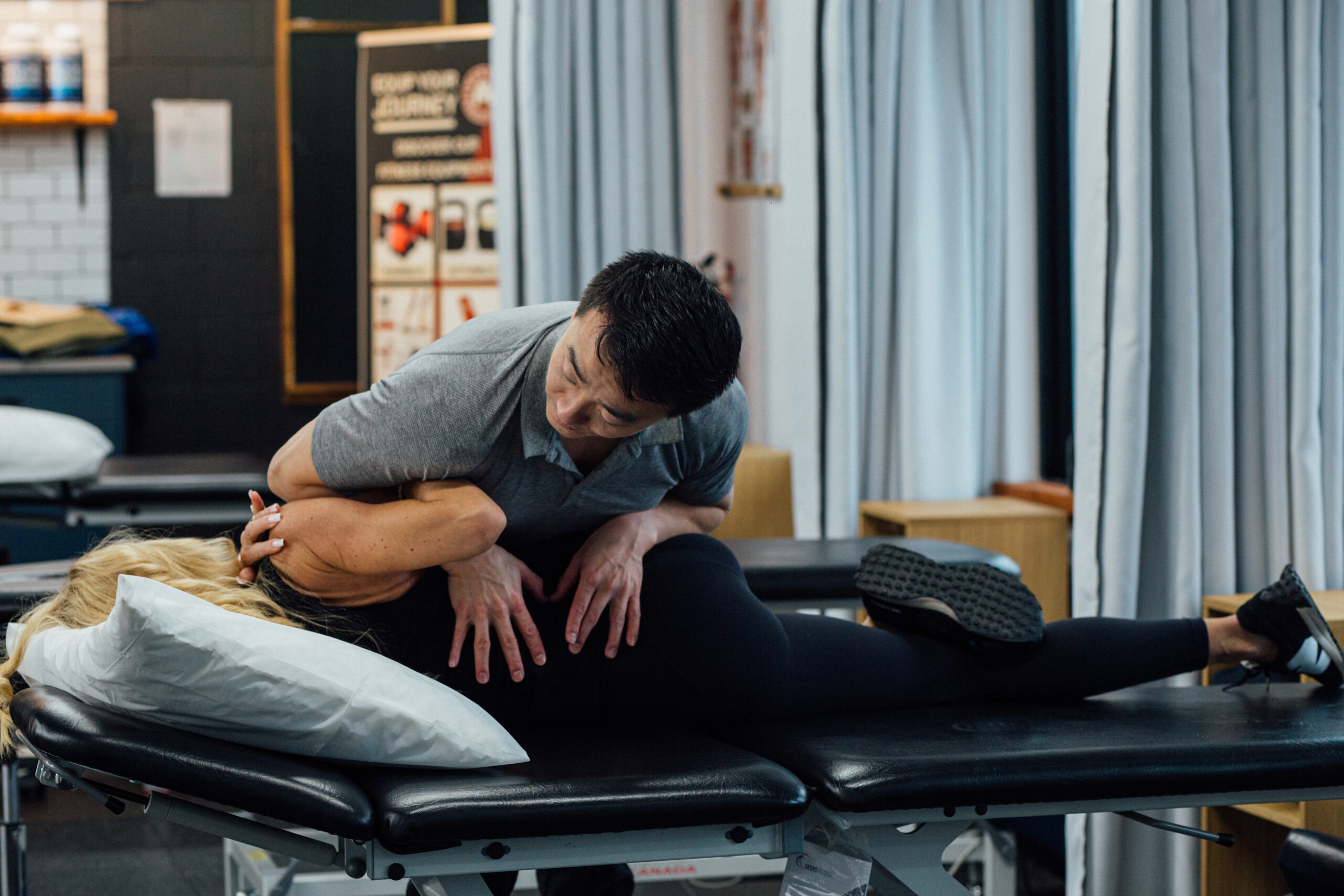
Back pain in Coquitlam is frequently a lifestyle injury — stemming from the prolonged static loading of the spine during long commutes and sedentary office work, followed by high-intensity weekend activity. The “Weekend Warrior” effect. At Coquitlam Physio & Health, our physiotherapy team utilizes a specialized assessment to identify if your back pain is a discogenic issue, a muscular imbalance, or a mobility gap in the hips and thoracic spine. We go beyond the “rub and crack” model to build a resilient, load-bearing spine that can handle the demands of a BC lifestyle.
TL;DR: The Back Recovery Path
|
The Patient: The “West Coast Office-Athlete”
Meet “Robert” — a 42-year-old project manager living in Coquitlam. Robert’s life is typical for the Tri-Cities: 90 minutes of commuting to Vancouver daily, six hours of meetings, then attempting to stay fit by hiking the Coquitlam Crunch or hitting the gym on Saturday mornings.
For six months, Robert had been dealing with a gnawing ache in his lower back that occasionally traveled into his glutes. He felt 80 years old every time he got out of his car — and his gym progress had stalled because he was terrified of throwing his back out during a squat. If your pain stems from an ICBC motor vehicle accident, you may be eligible for $0 coverage for this exact type of care.
“Robert’s back wasn’t weak — it was overworked. It was compensating for everything his hips and thoracic spine had stopped doing after years of sitting. The back was the victim, not the criminal.”
— Charles To, MScPT
The Investigation: Finding the “Power Leak”
At most clinics, Robert would have received a generic massage and some cat-cow stretches. At Coquitlam Physio & Health, he entered our Integrated Clinical Blueprint — assessed through three distinct clinical lenses simultaneously. This same approach applies whether you have knee pain, shoulder pain, or back pain — the Power Leak is almost never where it hurts.
The Biomechanical ScreenIdentified “Gluteal Amnesia” — Robert’s hip flexors were locked tight from sitting 8+ hours daily, pulling his pelvis forward and forcing his lower back muscles to work 200% harder just to keep him upright. |
The Neurological ResetUsed IMS to target the deep multifidus muscles along Robert’s spine — stuck in a protective spasm. By releasing them with precision needling, Edmund shut off the pain alarm in Robert’s nervous system. |
The Functional LoadingIdentified that Robert’s core wasn’t weak — it was timed incorrectly. Re-trained Robert on how to pre-brace his spine during the transition from sitting to standing, removing the surprise load that was causing the pain. |
The Intervention: Training Through the Pain
Robert’s rehab didn’t involve bed rest. Instead, we followed our unique Exercise Prescription model — moving him progressively from pain management to high-performance loading.
The “Commuter Protocol”: What Robert Did Between Sessions
Recovery doesn’t happen only in the clinic. We gave Robert a set of micro-interventions for his daily lifestyle — the chair, the car, and the desk — that prevented the spine from re-locking between appointments:
In the CarLumbar roll support + a 2-minute hip flexor stretch at every stop longer than 30 minutes. Seat reclined to 100 degrees — not 90 — to reduce disc pressure during the commute. |
At the DeskStanding every 45 minutes + 10 glute squeezes before sitting back down — reactivating the glutes before the chair switches them off again. |
Before the GymA 5-minute “spine wake-up” protocol — cat-cow, hip circles, and banded glute activation — before any loaded movement. Turning the engine on before flooring the gas. |
The Result: A Resilient Spine
After six weeks, Robert wasn’t just pain-free — he was stronger than he was before the injury. He could finish his commute without stiffness, deadlift with confidence, and was back hiking the Coquitlam Crunch without a second thought.
Jayten Patel, MPT, CSCSNeuromuscular Bracing Lead Expert in reactive spinal stability and teaching the body how to protect the spine automatically — not just during exercises. |
Charles To, MScPTPostural Biomechanics Lead Specialist in identifying how the pelvis, hips, and thoracic spine contribute to lower back loading patterns. |
Edmund Gu, PTIMS & Spinal Release Lead Senior lead for IMS and complex orthopedic spinal release — specializing in deep multifidus and paraspinal muscle intervention. |
Related Reading
|
Is Your Commute Killing Your Back?Whether your back pain is from an ICBC rear-end collision on the Lougheed Highway or six months of office chair compression — our integrated physio team will find the Power Leak and build you a resilient spine. Book your assessment today. |