
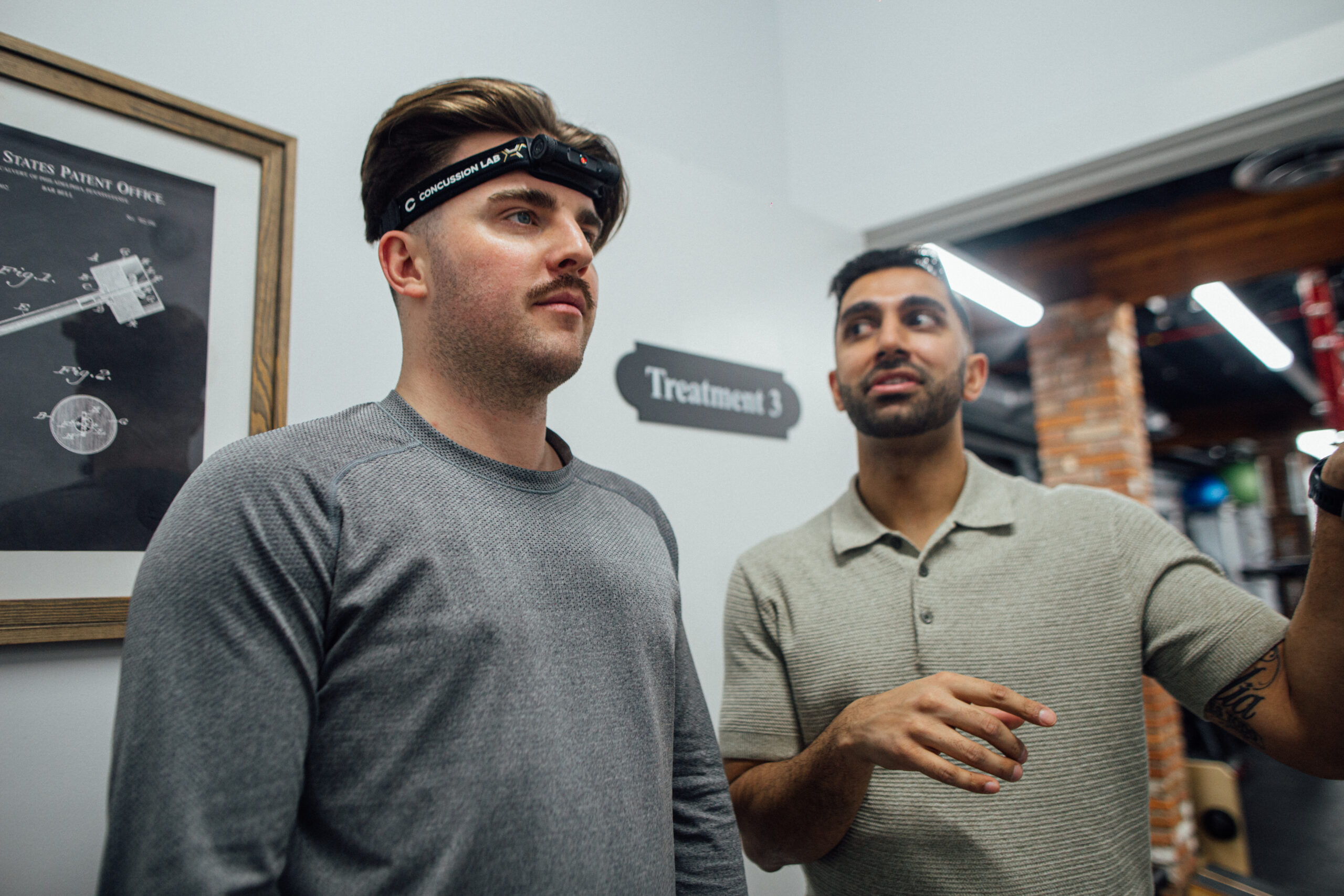
In most of the Tri-Cities, concussion care is fragmented. You visit a family doctor for a note, and perhaps a physiotherapist for some balance work. The two rarely, if ever, speak. This lack of collaboration leads to delayed recoveries — and athletes returning to the field before their brains are truly ready. At Coquitlam Physio & Health, we’ve built a model that doesn’t exist anywhere else in the region.
TL;DR: The Concussion Model Brief
|
A Broken System for Brain Health
The standard concussion protocol in BC looks like this: sit in a dark room, avoid screens, wait for symptoms to fade, get medical clearance, return to sport. This approach has three critical failures. The same reactive and neurological testing we use for concussion recovery is also how we treat chronic ankle instability — both are neurological timing problems, not just structural injuries.
No Baseline to Return ToIf there is no pre-injury cognitive and physical baseline on file, “feeling better” is entirely subjective. There is no objective standard to measure recovery against. |
No Communication LoopDoctors write notes. Physios run drills. Neither knows what the other is doing. The patient falls through the gap — and sometimes back onto the field too soon. |
Passive Recovery OnlyRest and darkness are appropriate for the first 24 to 48 hours — not weeks. Prolonged inactivity extends recovery time and increases sensitivity to symptoms. |
Case Study: The “Clearance-to-Play” Success
Consider a local high-school athlete — let’s call him Sam. After a hard hit during a soccer match, Sam was experiencing headaches and brain fog. His vision felt “laggy” during fast movements, and he was struggling to concentrate in class. Standard care would have him sit in a dark room and wait. Sam entered our Physician-Physio Collaborative Model — and everything changed.
“We didn’t clear Sam when his headaches stopped. We cleared him when his reaction time and cognitive processing were objectively back to 100% of his pre-season baseline. That’s the standard every concussed athlete deserves.”
— Jayten Patel, MPT, CSCS
The Manhas Health Co. Unique Approach
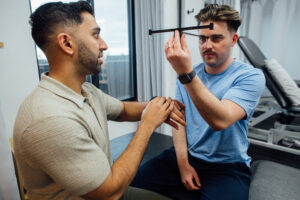
Sam’s recovery followed a three-pillar model that runs simultaneously — not sequentially. Each pillar informed the others in real time:
Sam’s Return-to-Sport Protocol: Stage by Stage
Why This Matters for Coquitlam Families
We are the only clinic in the area where the medical doctor and the physical therapist work as a single clinical unit. This isn’t just rehab — it’s a high-tier clinical system for brain health. And it matters because Second Impact Syndrome (a second concussion before the first has fully healed) can be catastrophic. If the concussion occurred in an ICBC motor vehicle accident, our objective documentation provides the clinical evidence your claim needs.
For AthletesReturn to sport with complete confidence — not just absence of symptoms, but objective proof your brain is ready for competitive demands. |
For ParentsTotal peace of mind. Your child’s clearance is backed by a physician and a physio reviewing the same data — not one professional’s gut feeling. |
For ICBC PatientsPost-MVA concussions are documented with objective data — providing defensible clinical evidence for your claim and ensuring full neurological recovery before case closure. |
Related Reading
|
Don’t Gamble With a Concussion.Whether it’s a youth athlete, an ICBC patient, or a professional navigating post-concussion symptoms — our Physician-Physio Collaborative Model provides the highest standard of brain health care available in the Tri-Cities. Inquire today. |